
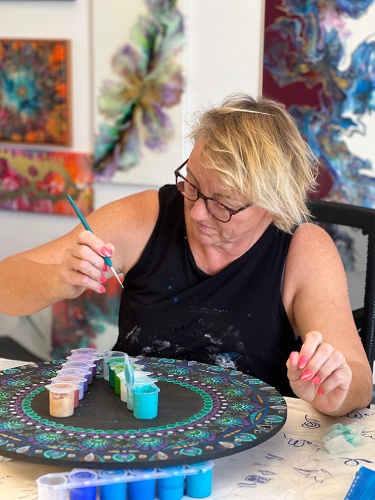
My Inspiration & Artistic Process
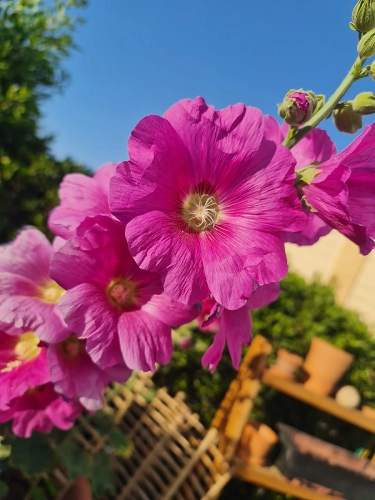
Nature is my greatest inspiration — especially the magical hues of the Red Sea, its marine life, its corals, its shimmering blues and pinks.
I’m a self-taught abstract artist working mainly with the acrylic pouring technique, also known as fluid art. This method blends acrylic paint with different mediums to create flowing, organic patterns. It’s a delicate balance between intention and letting go — and the only way to master it is to keep practicing. Mistakes are part of the journey.
I often enhance my pieces with epoxy resin. It gives depth, incredible shine, and adds a protective layer that transforms the artwork into something multidimensional. It’s not always easy — resin work can be frustrating — but every challenge teaches me something new.
Where I Am Today
I’m now exploring mandala and dot painting, a meditative and spiritual technique that brings me calm, joy, and inner peace. These circles of color feel magical — like painting a vibration.
Art has become my therapy, my passion, my practice.
Today, I’m proud to share my creations with you, and I hope they will bring you as much emotion as they gave me while making them.
Thank you for being here
— Caro
The Techniques Behind the Flow
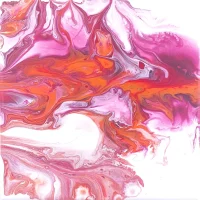
Fluid Art — When Colors Flow Freely
Fluid art — also known as acrylic pouring, pour art or flow art — is the poetry of movement and color.
Here, paints are thinned with water and special mediums, then guided by air or gravity to create flowing, unpredictable shapes.
It’s a dance between control and spontaneity — a pure form of abstract expression.
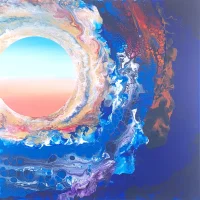
Negative Space — The Art of Breathing
In painting, negative space is the silence that gives voice to the colors.
It’s the untouched area, a pause in the composition — any color, any tone — that lets the artwork breathe and gives depth to emotion.
Mandala Art — The Circle of Harmony
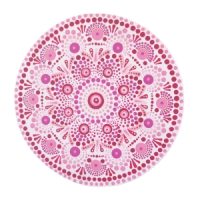
The mandala is more than a design — it’s a symbol of the universe.
Born from ancient Hindu and Buddhist traditions, it radiates from a central point in perfect symmetry.
Each shape, each line reflects balance, unity, and self-discovery — an invitation to meditate, to reconnect, and to find calm through creation.
Dots Art — The Language of Patience
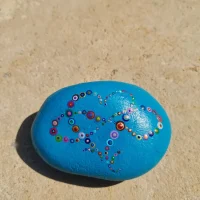
In dot art, beauty is built dot by dot.
This technique — also called pointillism — uses countless small dots of color to form texture, light, and rhythm.
It’s a slow, meditative process that turns repetition into harmony.
Dutch Pour — The Breath of Color
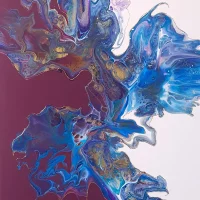
Inspired by Rinske Douna, the Dutch Pour is a dance of air and paint.
A base color — the “negative space” — is poured onto the canvas, then thin layers of paint are added in lines or puddles.
With a breath of air, the paints flow, blend, and form delicate lacing — a moment where fluid becomes form.
Flip Cup — The Joy of Chance
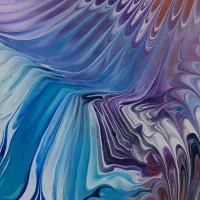
The Flip Cup is pure play.
Different paints are layered into a cup, then flipped onto the canvas.
When the cup is lifted, colors flow, mingle, and collide — creating spontaneous compositions, never the same twice.
Each pour is an adventure in color and gravity.
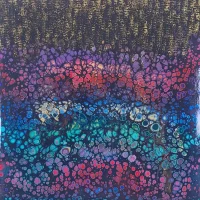
Swipe — The Movement of Layers
The Swipe technique begins with layers of color spread across the canvas.
Then, a new layer — the “swipe color” — is gently drawn across the surface.
Underneath, cells and textures awaken — revealing the dialogue between surface and depth.
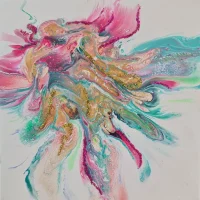
Dip — The Art of the Reval
A Dip is painting by contact — a moment of touch between surfaces.
Paints are spread on a base or canvas, then covered with paper, film, or even another canvas.
When lifted, the reveal uncovers a hidden pattern — like discovering color through reflection.